Find Out More
Epidemiologists design and conduct investigations aimed at improving the health of groups of people by combining knowledge from the social sciences, medicine, biology, the environment, and statistics.
April 23, 2026 | Erin Bluvas, bluvase@sc.edu
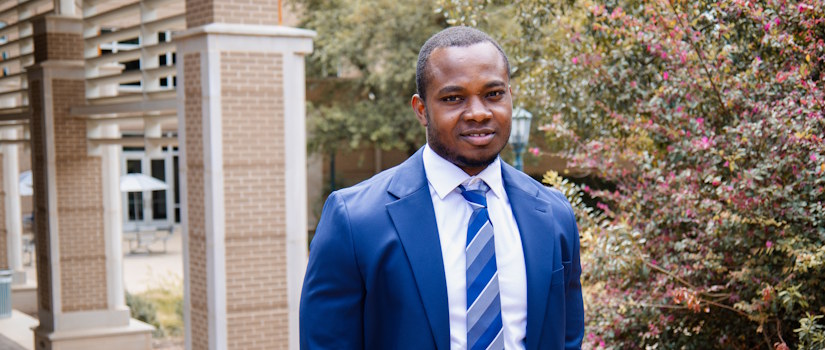
“My experience at the University of South Carolina has been truly amazing, and USC will always feel like home to me,” says Daniel Amoatika, who graduates in May with a Ph.D. in Epidemiology “I’ve had the opportunity to meet incredible people from different continents, and that diversity created an environment where we shared knowledge, challenged one another intellectually and achieved meaningful things together.”
Amoatika was working as an emergency room nurse when he first considered a career in the field. His supervisor was pursuing a master’s degree in epidemiology and disease control at the University of Ghana, and he discovered he had a knack for contributing ideas to the materials and challenges she was learning about in class.
He soon enrolled in the same program and complemented the degree with additional training as a field officer with a collaborative initiative led by the Centers for Disease Control and Prevention and Ghana Health Services. Amoatika then served as an epidemiologist with the Infection Prevention and Control Department in Barbados.
During this time, he connected with Arnold School epidemiology associate professor Monique Brown, whose research interests overlapped with Amoatika’s thesis work on rapid diagnostic HIV test kits. Brown agreed to mentor him for his doctoral program, which played a major role in his decision to attend USC.
“Since then, that mentorship and the research opportunities I found at USC have been one of the most valuable parts of my academic journey,” he says.
Over the past few years, Amoatika has gained research experience through several graduate assistantships. In the Department of Epidemiology and Biostatistics as well as the Department of Health Services Policy and Management, he was involved in research examining the effectiveness of telehealth in providing care for older adults living with HIV. As a graduate research assistant with the Office for the Study of Aging, he collaborated on research using the South Carolina Alzheimer’s Disease Registry and the Dementia Dialogues program, leading to several peer-reviewed publications. As an intern with the South Carolina Department of Public Health, he contributed to statewide hepatitis C surveillance.
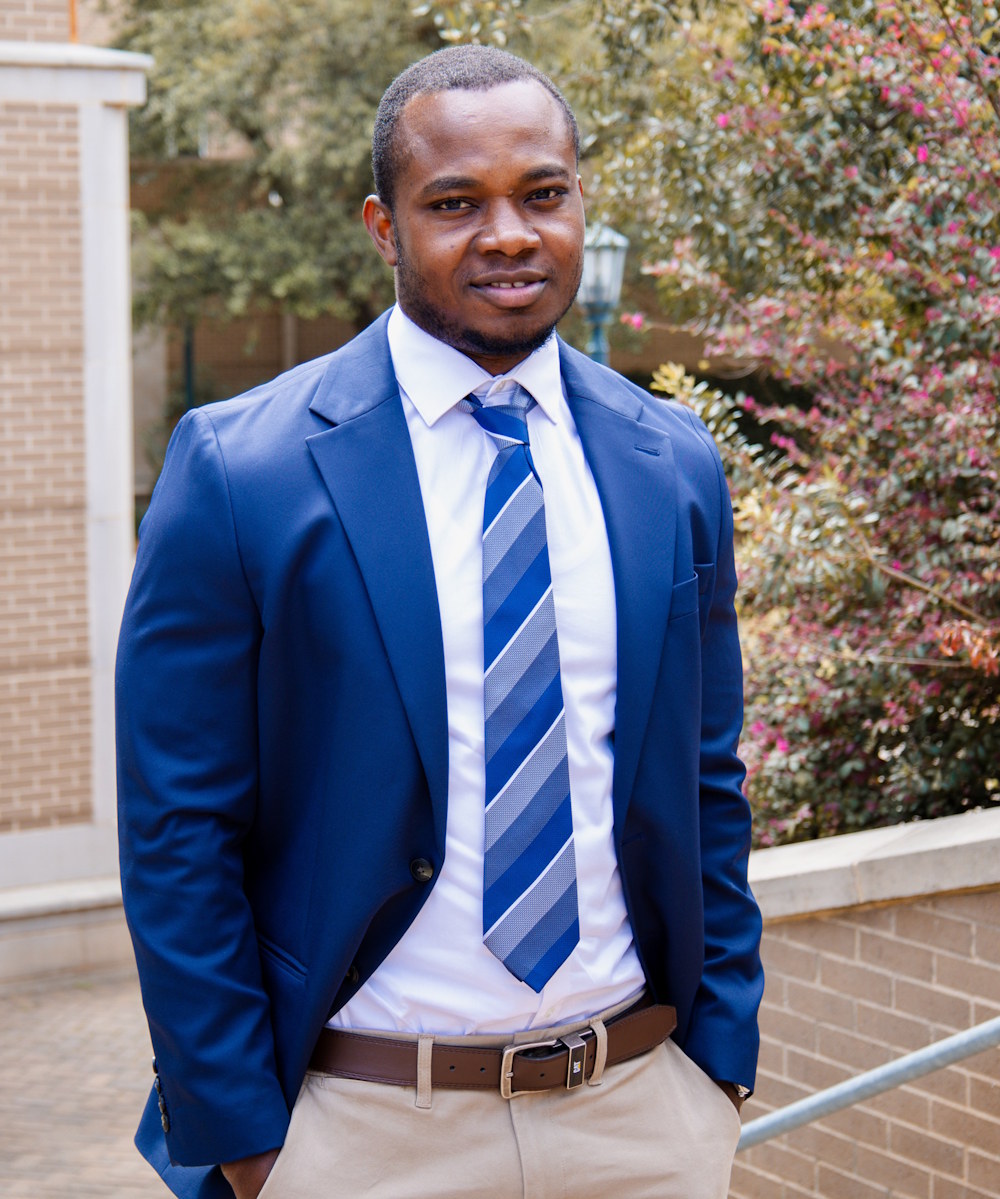
As a result of these experiences, aging and HIV/AIDS-related research have emerged as his primary interests. Within these areas, his work focuses on cognitive decline, pharmacoepidemiology, causal inference and the use of real-world data to address public health problems. He plans to continue building on this expertise through a postdoctoral fellowship focused on Alzheimer's disease and related dementias.
“I see my degree as an important foundation for that path because it has strengthened my training in epidemiologic methods, causal inference, and the use of real-world data for complex clinical and population health outcome research,” Amoatika says. “My overarching goal is to advance knowledge in aging, pharmacoepidemiology, and ADRD outcomes through rigorous epidemiologic research.”
Beyond academics, Amoatika says that USC has given him friends that he proudly describes as family. The mentorship stands out even more – with faculty like Brown and health promotion, education, and behavior professor Daniela Friedman as well as Office for the Study of Aging co-directors Maggi Miller and Megan Byers providing guidance and support that placed him in a much stronger position to grow professionally and remain relevant in his field.
As an immigrant with a conditional admission and administrative complications with his initial visa, Amoatika reflects on his navigation of the unexpected and challenging aspects of his Ph.D. journey with gratitude. He’s proud of how far he’s come – graduating with a nearly perfect GPA, 20 peer-reviewed publications, and nominated for the Graduate School Outstanding Research Award. He highly recommends the Arnold School to other students, stating that its interdisciplinary environment is one of the school’s greatest strengths.
“When you get the opportunity, explore other departments and take courses outside your immediate program to broaden your thinking about research, industry and public health practice,” Amoatika says. “I would also advise: do not be an island. Network, build friendships and learn how to work with others because many of the best opportunities come through collaboration. Another strength of the Department of Epidemiology and Biostatistics is that the training goes far beyond the classroom; the department strongly encourages applying what you learn to real-world public health problems and in-class projects, which I found extremely valuable in shaping my research and professional growth.”
Epidemiologists design and conduct investigations aimed at improving the health of groups of people by combining knowledge from the social sciences, medicine, biology, the environment, and statistics.
The Arnold School is proud of our 2026 graduates, who will go on to change the world locally and globally. Learn about some of the other outstanding individuals who completed one of our 34 programs this year.