By Bryan Gentry
Each year, young students throughout South Carolina scout nature reserves for rocks and plants, hike along creeks to study erosion, or plan science fair projects related to their passions.
Many of them grow up to attend the University of South Carolina, where they may continue to study geology, ecology, marine science and other exploring the natural world.
All of these are part of the legacy of one USC professor who was in the right place at the right time.
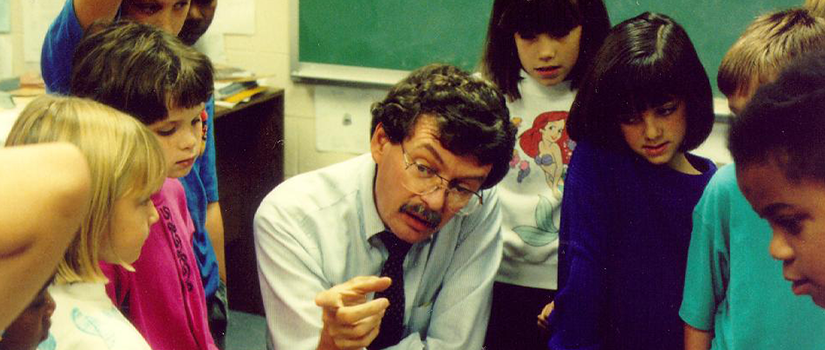
John Carpenter came to USC in 1966. A year later, South Carolina began mandating Earth science lessons in eighth grade, inspiring him to help teachers prepare for that assignment, laying the groundwork for the Center for Science Education.
Carpenter, a longtime USC geology professor, died on November 10, 2025, with his wife, Charlie, at his side.
Faculty, staff and alumni who worked closely with Carpenter remember him as a visionary teacher and a pioneer in geoscience education.
“My ability to do my work today is based on the ways in which Dr. John Carpenter advanced the field of geology towards embracing what's now known as geoscience education research,” said Katherine Ryker, co-director of the Center for Science Education and a associate professor in the School of the Earth, Ocean and Environment.
“He demonstrated to me that caring about teachers and faculty helped bridge my own understanding of pedagogy and content,” added Sean Yee, CSE co-director and a professor in the Department of Mathematics and the College of Education. “He was humble and a kind man that I will remember.”
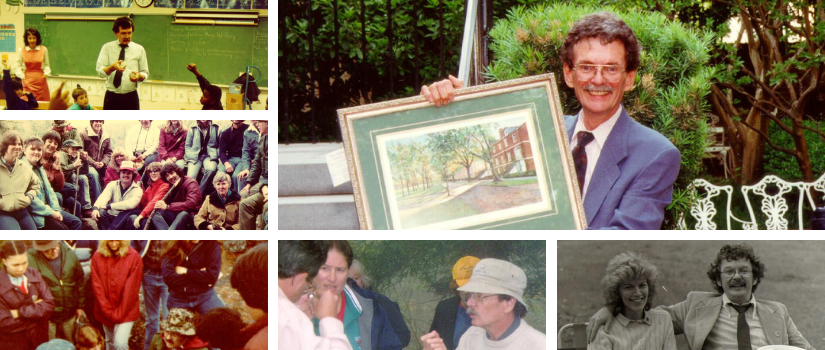
A Pioneer in Geoscience Education
In an article written by Carpenter, he recalled recognizing that teachers needed professional development in the sciences once the South Carolina legislature mandated geoscience education in public schools.
“Teachers, however, had virtually no subject matter background in that area,” Carpenter wrote. He secured a National Science Foundation grant to help him introduce teachers to Earth science and teaching methods.
“I discovered the joy in working with teachers," Carpenter continued. In 1973, he spent a year working with the Earth Science Teacher Preparation Project in Boulder, Colorado, which Carpenter described as “a career-changing event.” Back at USC, he completely restructured his courses to decrease lecture time and put more emphasis on discussions, service projects and other activities. He also began sharing these strategies with K-12 teachers.
Over the years, Carpenter spent more and more time doing science education outreach with the encouragement of his dean. In addition to his teacher workshops and conferences, he conducted research to test which science teaching methods were most impactful.
When USC faculty talk about Carpenter, one recurring theme is that he was among the first people to reach out to them when they came to USC. He helped them feel welcome, but he also showed them the impact they could make by adding K-12 education to their research and outreach interests.
“I was very interested in doing outreach into the community and in developing hands-on activities in my marine science classes," said Claudia Benitez-Nelson, a senior associate dean and Carolina Distinguished Professor in the McCausland College of Arts and Sciences. "John was tireless in his support of my efforts.”
Benitez-Nelson described how Carpenter helped her create ScienceQuest, a program that brought hands-on science activities into local schools and homeless shelters. Over a 15-year span, more than 600 K-6th graders participated with more than 150 USC students who helped run the program.
“To this day, I still receive emails and comments from students who participated in the program about how much this influenced their views on being creative and engaged teachers and mentors,” Benitez-Nelson said.
Carpenter’s former students have similar stories and describe him as a mentor who became a friend. They describe receiving awards for teaching and community service and leading fulfilling careers that they credit to Carpenter’s influence.
“Teaching environmental geology led me to a deep concern about the environment and the urge to learn more about it and to share that knowledge,” former student Carolyn Hudson said.
Carpenter also had a profound influence away from USC by stoking interest in geoscience education research across the nation. Steven Semken, a college professor in Arizona, described how Carpenter commanded respect wherever he went.
"John was a giant but always a gentleman giant, respected and loved by so many of us," Semken said. “Great love for the Earth and for humanity shone in his words and his works. John will be greatly missed and never forgotten.”