
Find Out More
Health Services Policy and Management (HSPM) is an interdisciplinary field concerned with the promotion of personal and public health through planning, organizing, directing, controlling, coordinating and evaluating health services.
January 14, 2026 | Erin Bluvas, bluvase@sc.edu
Health services policy and management (HSPM) doctoral candidate Syeda Shehirbano Akhtar is still in the early part of her career, but she’s already amassed significant global health experience. Beginning with an internship at the Armed Forces Institute of Pathology when she was an undergrad studying applied biosciences at the National University of Sciences and Technology in Pakistan, Akhtar was hooked.
After graduating with a Master of Public Health from the National University of Medical Sciences, she began working on a variety of projects with international institutions, such as the World Health Organization (e.g., global burden of disease, sexual and reproductive health and rights, maternal and perinatal death surveillance and response), London School of Hygiene and Tropical Medicine (e.g., health benefits coverage based on disease control priorities), and Pakistan’s Ministry of Health.
“While working with these organizations, I contributed to public health programs and health systems strengthening efforts, where I saw firsthand how policy decisions, data availability, and service delivery shape population health outcomes in resource-limited settings,” Akhtar says. “These experiences highlighted the limitations of traditional surveillance systems, particularly in responding to infectious diseases such as sexually transmitted infections (STIs).”
After observing these limitations, the Fulbright Scholar began looking for innovative, population-level monitoring methods, such as wastewater-based epidemiology (WBE), to provide earlier detection, complement clinical reporting, and help inform policy and public health decisions. She chose the Arnold School for her doctoral degree so that she could learn how to leverage these types of tools to solve real-world public health challenges. Now at the dissertation phase of her program, Akhtar has received a grant from the American Sexually Transmitted Diseases Association to refine laboratory and analytical methods for identifying pathogens such as chlamydia, gonorrhea, and syphilis in community wastewater.
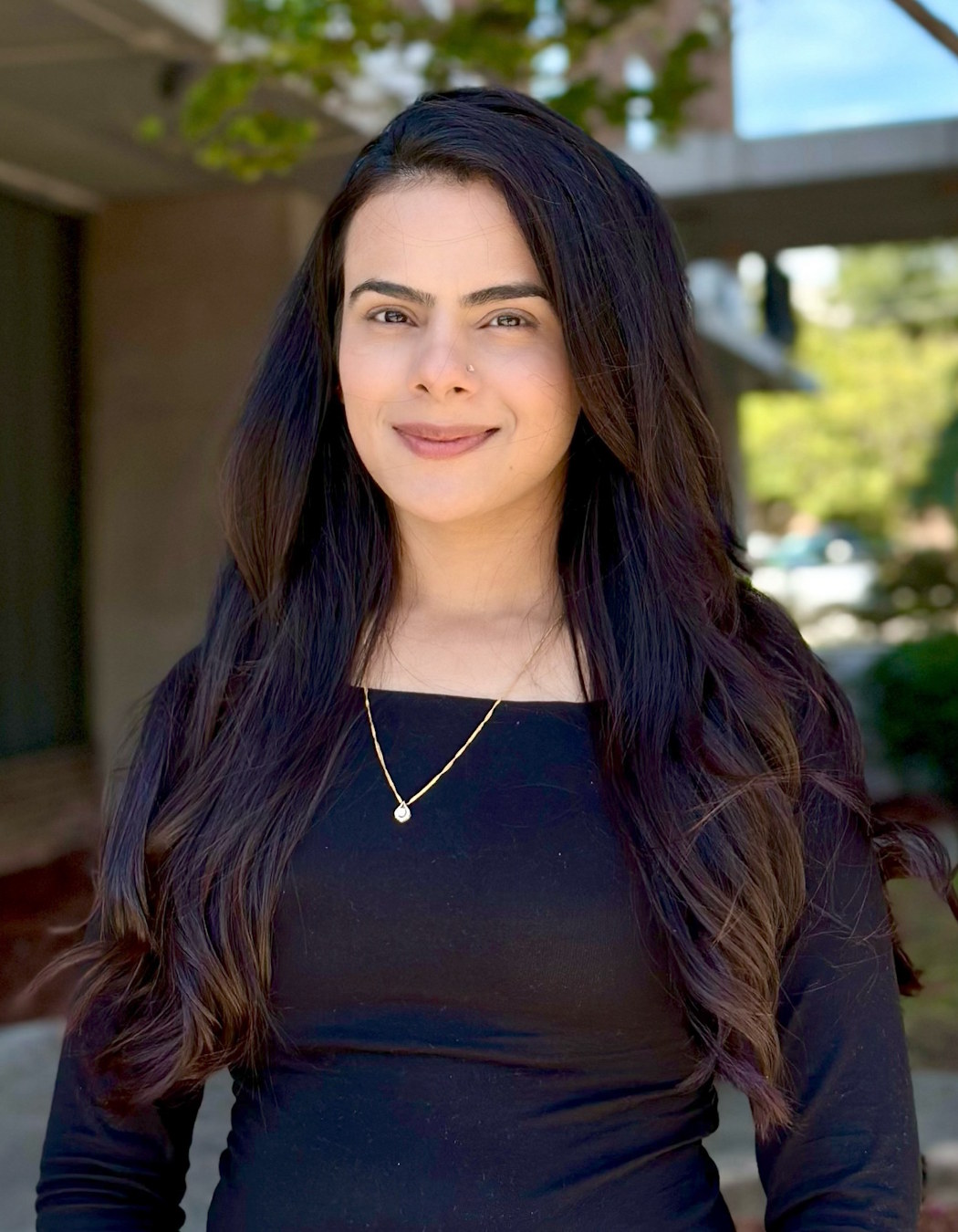
“Wastewater offers a rare and powerful opportunity to see the health of an entire community at once, especially for populations who may not have access to testing or may be underrepresented in routine surveillance systems,” she says. “Developing reliable wastewater-based indicators for STIs requires both rigorous lab science and a strong public health context. The collaborative environment in Arnold School has made that possible.”
For Akhtar, a big part of that collaborative environment has been her mentor, HSPM associate professor Bankole Olatosi. The big data health science expert has helped her build methodological foundations related to the use of electronic health records systems, HIV care continuums, and COVID-19 trends that are essential to her work in WBE STI surveillance. She also collaborates closely with researchers from the Departments of Environmental Health Sciences and Epidemiology & Biostatistics to integrate molecular laboratory techniques with epidemiological modeling and population-level datasets.
“My work has been profoundly shaped by the mentorship I have received at the Arnold School, particularly from Dr. Olatosi, whose expertise in infectious disease research, big data, and interdisciplinary approaches has played a central role in sharpening my research direction and strengthening my methodological rigor,” Akhtar says. “His guidance has been instrumental in my transition from practitioner to independent scholar and taught me to approach data not only as an analytical tool but as a mechanism for informing policy and supporting evidence-based decision-making within health systems.”
After graduating, Akhtar plans to continue developing and integrating laboratory methods like WBE with epidemiological data to help public health agencies identify emerging infectious disease trends earlier. Grants like the one she has just received highlight the importance of efforts to establish more proactive, responsive and inclusive data-drive health systems.
“My goal is to turn this work into practical tools that help public health decision-makers act faster, reduce disparities, and ultimately improve how we protect population health,” Akhtar says.